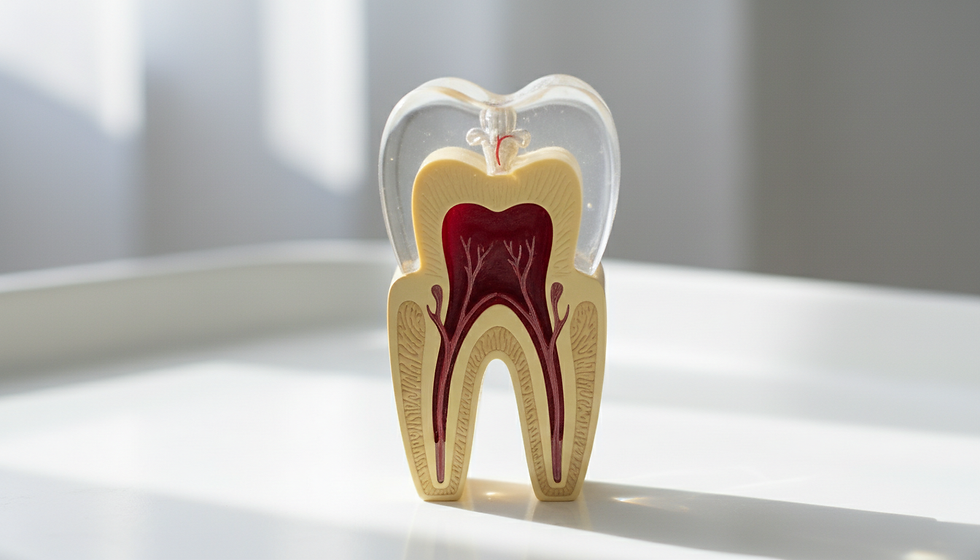
Cracked Tooth: Do I Need a Filling, an Onlay or a Crown?
A cracked tooth does not automatically need a crown. A small chip may suit a filling; weakened chewing points may need an onlay; a more extensively damaged tooth may need a crown. The right choice depends on what remains of the tooth, where the crack extends and whether the nerve is healthy, not simply whether it hurts.

If you are comparing cracked tooth treatment in Oakleigh, the useful starting question is: what does this tooth need to remain comfortable and functional? An examination helps separate a minor surface line from a structural problem.
Why can a cracked tooth hurt only sometimes?
Chewing can move the tooth slightly along a crack and irritate the soft tissue inside, called the pulp. You may notice sharp pain when biting or releasing your bite, or sensitivity to temperature. Some cracks cause no symptoms. Pain alone cannot tell us the crack’s depth.
Fine lines confined to enamel, known as craze lines, often need no treatment beyond observation. A crack involving deeper tooth structure requires a different assessment. These situations can look similar in a photograph.
What needs checking before choosing treatment?
Your dentist may check individual chewing points, the bite, gum probing depths and the tooth’s response to cold. Magnification and light can help reveal a crack. X-rays can show decay or changes around the root, but may not show the crack itself. Sometimes an old filling needs removal, with your consent, to assess the tooth.
Even after testing, the full depth may remain uncertain. Ask what is known, what is suspected and whether a staged approach or specialist assessment would help.
Filling, onlay or crown: what is the difference?
A filling replaces a smaller missing area directly in the tooth. It may suit a limited chip or defect with enough supporting tooth remaining. A conventional filling may offer insufficient protection when chewing points are thin or undermined.

An onlay covers one or more chewing points, called cusps. It may provide coverage while preserving tooth structure that would otherwise be removed for a full crown. Suitability depends on the remaining enamel, the crack and the ability to bond the restoration reliably.

A crown covers most of the visible tooth. It may be considered when damage is extensive or broader protection is needed. Preparation removes natural tooth structure and is irreversible. Potential problems include sensitivity, nerve complications, chipping or loosening, and decay around the edges.
Dental crowns in Oakleigh Learn more

These are options for different clinical situations, rather than a ladder in which the biggest restoration is always best.
Could I need root canal treatment, or monitoring?
Root canal treatment is considered if the pulp is irreversibly inflamed or infected; it is not automatically required before a crown. A deeply extending crack or split may make the tooth unsuitable for restoration, so extraction may need discussion.
Monitoring may be reasonable for an assessed low-risk finding. It should include a review plan and advice about changes to report. For a structurally compromised tooth, continued loading may allow further damage, potentially changing the available treatment. There is no reliable countdown for an individual tooth.
Root canal treatment learn more
What are the limits of treatment?
A restoration does not make a crack biologically heal. An onlay or crown may help protect the tooth, but cannot guarantee the crack will stop or symptoms will settle. Bite forces, grinding, crack extent and remaining structure affect the outlook. [1,2]
What should I do next?
Until assessed, avoid hard foods on that tooth. Contact a dentist for a suspected crack, particularly with persistent biting pain or temperature sensitivity. Increasing swelling or severe pain needs urgent assessment. Difficulty breathing or swallowing requires emergency medical care.
At Dental Capital SE in Oakleigh, you can discuss the findings, reasonable options, likely costs and consequences of waiting before deciding. You are welcome to ask questions or seek a second opinion. This is general information; your treatment requires an individual examination.
Book a consultation with us and will investigate, and explain what we find, and explain the different treatment options for you.